
A KTV amplifier is not judged on its datasheet, it is judged in year three — with dust on the heatsink, a rack in a corridor at 32 °C, and a microphone that has been dropped on the floor twice a week. These are the things that decide the specification.
Four constraints decide the specification long before the wattage does.
KTV systems are used at low level as often as high level. What matters is mid-band clarity and a stable input stage, not the peak watt figure on the box.
Six rooms means six amplifiers in a cabinet with one small fan. Tracking Class-D and Class-H both cut dissipation, but the rack still needs a rear exit — plan it before the drywall goes up.
Two 8 Ω cabinets on one channel is a 4 Ω load; three is 2.67 Ω. Every Mils series is rated at 2 Ω per channel, which is what makes parallel wiring practical.
KTV racks are often built into joinery 350 mm deep. The X Series is 304 mm deep at 2U — one of the few full-power chassis that fits.
All six series are built in the same factory and share the same protection set. These three cover this application.
Toroidal-transformer Class-D with a 304 mm deep 2U chassis: 300 W to 2,000 W per channel, 2 Ω stable, channel separation above 60 dB — the standard KTV choice.
Four Class-H channels for rooms split into zones (main, booth, bar, toilet corridor) or for a bridged sub channel from a single 2U chassis.
When the room is 5.1 rather than stereo — five 300 W satellite channels plus a 600 W sub channel in one 3U chassis.
Comparing all six ranges side by side? Series comparison table →
Two full-range cabinets, one subwoofer, one wireless microphone system. This is the configuration we quote most often for private rooms.
| Position | Amplifier | Mode | Output |
|---|---|---|---|
| L / R cabinets | X600 | stereo 8 Ω | 2 × 600 W |
| Subwoofer | DAI204 | bridged 8 Ω | 1 × 1,200 W |
| 5.1 alternative | JK5316 | 6 ch, 8 Ω | 5 × 300 W + 600 W |
Two chassis, four rack units. The bridged DAI204 leaves its second channel spare for a booth monitor or a second sub if the room is extended later.
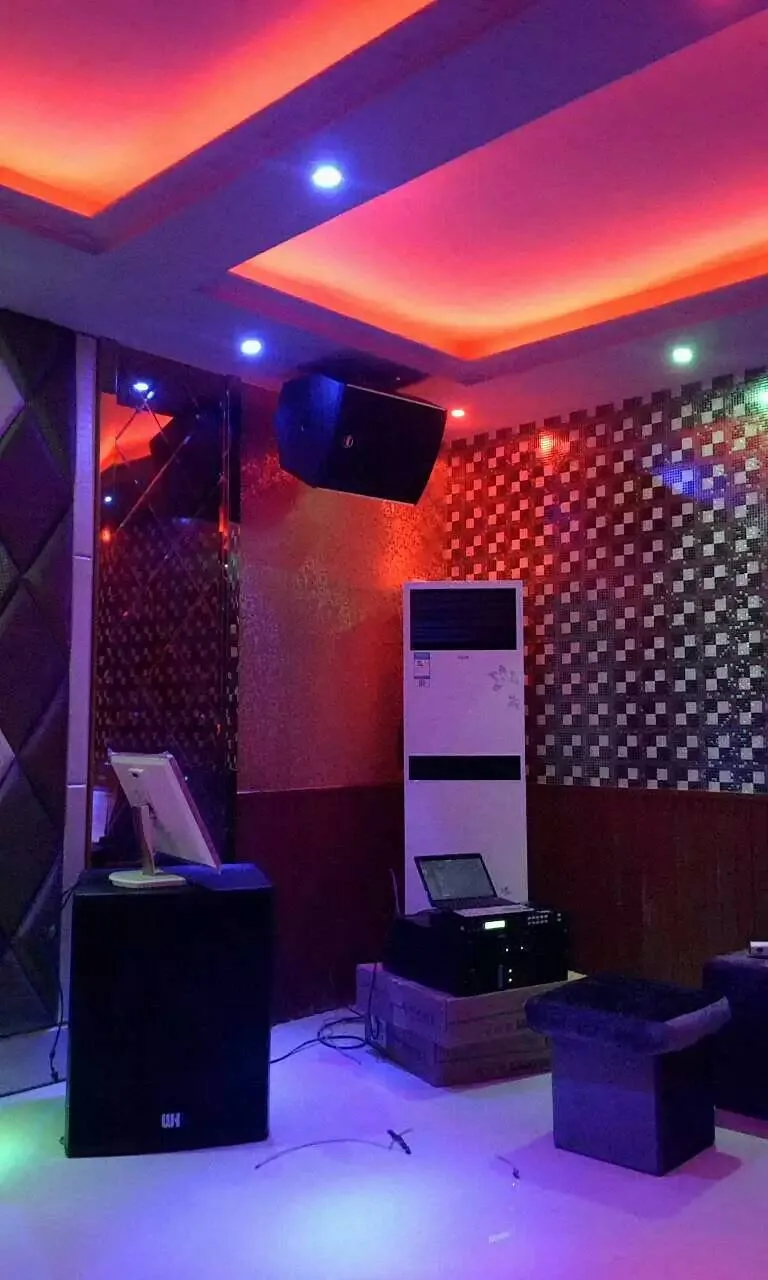
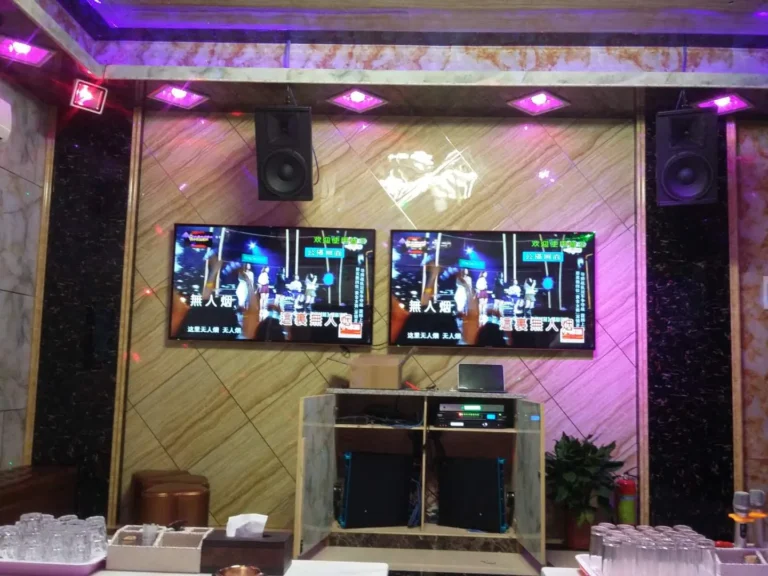
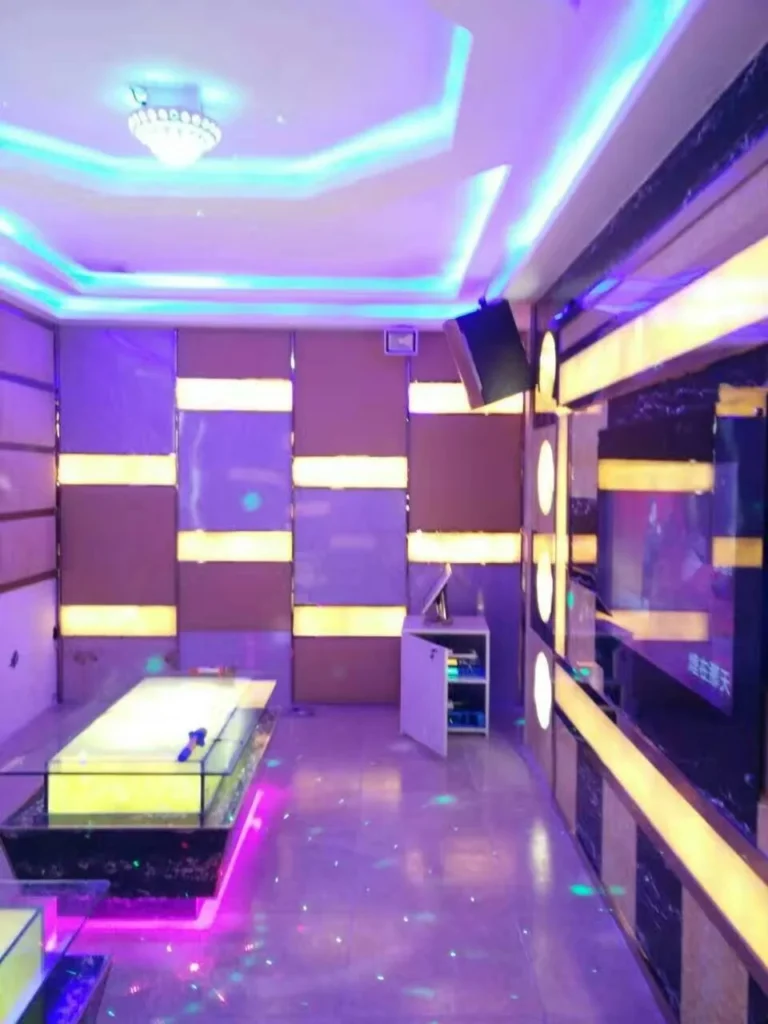
Photographs from commissioned rooms using Mils Audio amplification – all 52 installation photos →
Send the room count and sizes, plus whether each room is stereo or 5.1. We will return a per-room bill of materials and a spare-parts recommendation.